Women's economic independence
The Second SexWomen's economic independence is the material condition that can turn formal rights into a woman’s practical freedom, but it does not by itself dissolve the unequal order in which she lives. Work opens a path out of dependence on male support and gives a woman projects of her own; at the same time, low pay, exploitation, and the continuing burden of household and child care can make that path a second shift rather than emancipation. The argument follows economic independence from its historical roots in production and reproduction to its uncertain realization in modern working life.
Meaning and Historical Foundations
Economic independence matters because civic liberty without a material basis remains abstract. A woman may have the vote and yet remain dependent as a wife or mistress; work, by contrast, can make her less reliant on a man as an intermediary between herself and the world. The point is not that paid employment automatically makes her free, but that economic dependence helps keep her confined to a condition in which others determine her possibilities.
The historical argument connects that dependence to the division between production and reproduction. With the development of agriculture and more powerful tools, large-scale labor grew in importance; private property and inheritance strengthened men’s control over land and women, while women’s domestic work lost economic standing. The resulting patriarchal family made women’s economic oppression part of their broader subordination. Against this history, the prospect of women’s work on a large scale represents a real change: technological developments can make physical strength less decisive, and modern machines can be operated without the greater muscular power once demanded by heavy labor.
But neither machinery nor employment alone explains the whole relation. A woman’s reproductive role remains consequential in both social and personal life, and pregnancy and child care cannot simply be treated as interchangeable with paid work. The burdens vary with conditions: numerous pregnancies and sole responsibility for raising children weigh heavily, while reproductive choice, support during pregnancy, and child care can make maternal duties more compatible with employment. Economic independence therefore depends not only on access to production but also on how reproductive and domestic labor is distributed.
Work, Freedom, and Its Limits
Work can restore a woman’s active relation to the world. When she is productive and pursues projects, she can experience herself as a subject responsible for her aims, her income, and the rights she claims. Even in low-paid work, the feeling of having made one’s way without asking anyone for support can carry real significance. Employment can weaken the arrangement in which a woman must depend on a man to reach the world beyond her immediate circumstances.
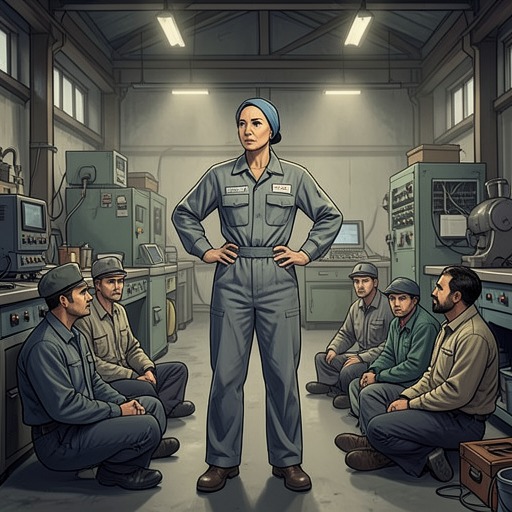
That possibility must be distinguished from the mere possession of a job. Most workers are exploited, and a job does not guarantee autonomy when social arrangements leave the old division of labor largely intact. Women who work in factories may still perform household chores as well; employers may pay women poorly while assuming that a man will supplement their earnings. Work can thus provide income without providing leisure, social power, or an equal share in shaping the conditions of life.
This gap also complicates the claim that women would simply prefer to stay at home. A choice between exhausting factory work and unpaid domestic labor is not a choice between equivalent forms of freedom. The circumstances under which work is performed matter: women might regard employment differently if it involved a world they could help build and in which they could participate with pride. In the existing order, however, neither society nor husbands reliably provide the help required to make women concrete equals at work or at home.
Dependence, Wages, and the Marriage Alternative
Economic dependence can persist even when a woman is employed. For a married woman, her salary often functions only as extra household income, rather than giving her control of an independent life. A woman who receives a man’s financial help may regard his protection as dispensable, but that arrangement still does not ensure independence. In some cases, work gives her a way to free herself from a lover; in others, a lover enables her to leave work. When both relations continue, she can be subject to the double pressure of a job and male protection rather than free of either.
The wages and living standards available to women sharpen this dilemma. A shopgirl, office worker, or secretary may earn too little to afford decent housing, clothes, recreation, or the social life expected of her. Under those conditions, the prospect of support from a privileged man becomes more than a private romantic possibility: it offers an apparent escape from material deprivation. An employer may count on this dependence while paying a woman a pittance. The support can sometimes help her improve her situation and achieve genuine autonomy, but it can also lead her to give up her job and become financially dependent.
The pressure to seek such support belongs to a wider structure of prestige and expectation. Marriage retains social value, men possess greater economic privilege, and women are encouraged to make themselves pleasing to men. The resulting temptation is not simply evidence of personal preference; it is intensified by the unequal rewards available to women who can enter a privileged household. Economic independence requires more than formally permitting a woman to work: it requires conditions in which the alternative of dependence does not appear to be her only route to dignity or comfort.
Domestic Labor and the Reproductive Burden
Paid work is difficult to separate from the unpaid labor that sustains a household. Pregnancy is not universally regulated, and birth control is neither universally available in practice nor rigorously used. Where abortion is officially forbidden, women may face health risks from unregulated procedures or be overwhelmed by repeated pregnancies. Child care and housework remain largely assigned to women, while in France a tenacious antifeminist tradition makes men regard participation in tasks reserved for women as demeaning. A woman may therefore be expected to reconcile family and professional life without an equivalent redistribution of care.
The peasant woman makes the accumulated labor especially visible. Her responsibilities can include tending the garden and animals, cleaning the cowshed, spreading manure, sowing, plowing, harvesting, and other fieldwork, as well as cooking, washing, mending, and managing the household. Pregnancy and child care add to these tasks. The day begins at dawn with feeding the animals and serving the first meal, moves through care of children and work in fields, woods, or garden, and continues after the evening meal with mending and other domestic work. Lacking time to care for her own health, she may be worn down by illness and early exhaustion. The contrast with men’s Sunday visits to town, cafés, cards, hunting, or fishing shows that work does not distribute leisure or social life equally. Only women with enough wealth to escape field labor or employ servants enjoy a more balanced routine.
Housework also claims the time that employment might otherwise make available for a woman’s independent projects. A wife can make a home her own through overseeing and performing its work, and this activity can give her a sense of responsibility and personal expression. Yet it does not necessarily release her from repetition or establish individual autonomy outside the domestic sphere. The daily labor of maintaining a home begins again after it is done; when paid work is added without a change in who performs care, the promise of economic independence remains constrained by the continuing work of reproduction.
The Independent Woman and an Unfinished Change
Women who have achieved professional and economic autonomy are a minority, and their situation is neither proof of failure nor evidence that the problem has been solved. Feminist and antifeminist assessments alike can miss part of the picture: professional achievement is real, but so are frustration and the difficulty of settling into a new condition. Even a woman who is economically independent does not necessarily occupy the same moral, social, or psychological position as a man. She enters adulthood with a different history and is viewed by society through different expectations.
The distinction between negative liberty and concrete independence is central to this unfinished change. Relaxed customs or formal civic rights may remove restrictions without changing the underlying dependence. A ballot and a job, taken alone, do not guarantee freedom; work must be considered alongside its wages, the conditions of employment, the division of domestic labor, and the woman’s ability to direct her own projects. The analysis thus treats economic independence as necessary but insufficient: it can restore agency, yet its promise remains limited while the social structures shaping work and family continue to bear the form imposed by men.